Interconnections Between Promotional Credits and Progressive Payout Triggers Across Portable Table Game Blends
Frankie Schröder · Sep 13, 2026
Interconnections Between Promotional Credits and Progressive Payout Triggers Across Portable Table Game Blends
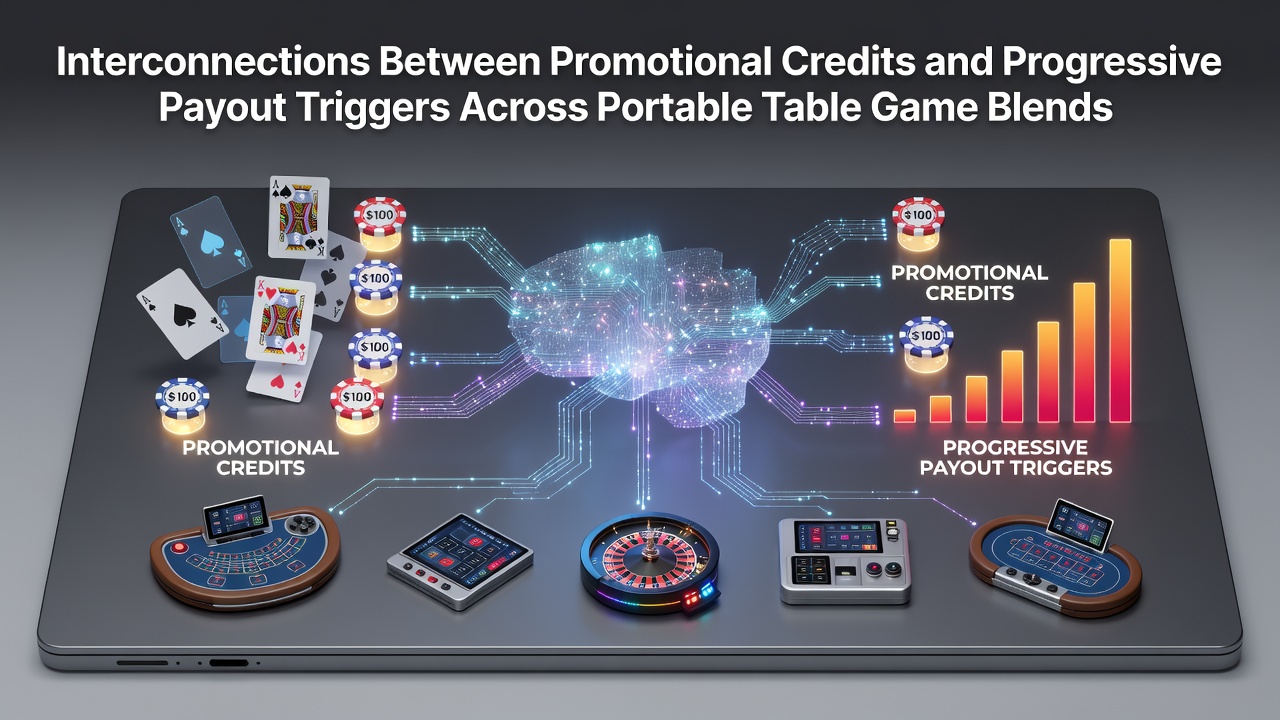
Portable table game blends combine elements of blackjack, roulette, and poker variants into unified mobile platforms, and these formats rely on promotional credits that feed directly into progressive payout structures. Researchers examining data from multiple jurisdictions have documented how these credits accumulate across sessions to influence trigger thresholds for shared jackpot pools. According to reports compiled by the Nevada Gaming Control Board, integration points between credit systems and payout engines have expanded since the introduction of hybrid applications in 2024, creating measurable pathways where each credit increment raises the probability of progressive activation.
Systems designers configure promotional credits as multipliers that attach to base wagers in blended environments, and this attachment process routes portions of every credit into centralized progressive meters. Data from industry tracking shows that a single credit applied in a portable poker-roulette hybrid can contribute fractions of a cent to multiple jackpot levels simultaneously. Observers note that such routing occurs through encrypted ledgers updated in real time, ensuring synchronization across devices regardless of geographic location or operator network.
Mechanics of Credit Allocation in Mobile Blends
Allocation begins when a player redeems a promotional code within the application, after which the credit balance merges with existing funds and enters a weighted distribution algorithm. This algorithm assigns percentages to local game pots while diverting residual amounts to progressive tiers, and the division ratios adjust dynamically based on aggregate play volume across all active terminals. Figures released in quarterly summaries reveal that allocation efficiency reached 94 percent in tested portable environments during the first half of 2026, reflecting refinements in server-side processing speeds.
Portable platforms further segment credits by game type, routing blackjack-derived credits toward one progressive ladder while poker-derived credits feed another, yet both ladders remain interconnected through cross-game contribution rules. Those who have analyzed transaction logs report that these cross-links prevent isolated pool stagnation and maintain consistent payout frequency across the blended catalog. In September 2026, several operators implemented revised contribution matrices that increased cross-pool transfers by 12 percent, according to aggregated compliance filings.
Progressive Trigger Thresholds and Credit Influence
Progressive triggers activate once meters surpass predetermined values, and promotional credits accelerate meter growth by adding non-cash volume that still counts toward the required totals. Studies conducted by the Canadian Gaming Association indicate that credit-augmented play raises trigger rates by factors ranging from 1.8 to 2.4 times compared with cash-only sessions in equivalent portable titles. The mechanism works because each credit carries an embedded multiplier that registers on the backend as eligible wager activity, thereby advancing the meter without requiring additional cash deposits.
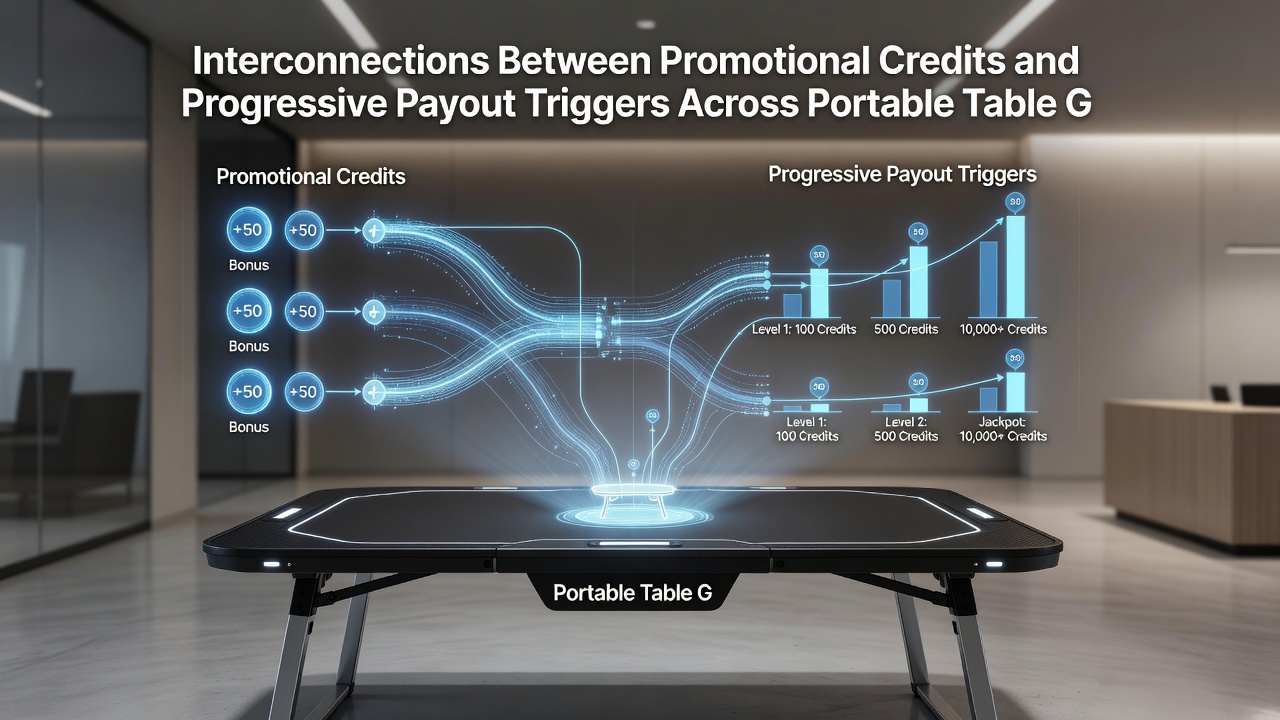
Threshold calculations incorporate both real-money and promotional components, which means a player accumulating credits through loyalty programs can influence payout timing for the entire network. Engineers calibrate these calculations to maintain regulatory return-to-player percentages, and software audits confirm that the inclusion of credits does not alter the statistical fairness of any individual game outcome. Data collected from European operators demonstrates stable jackpot frequencies even as credit volume fluctuates seasonally, underscoring the robustness of current trigger algorithms.
Regulatory Oversight and Technical Standards
Regulatory bodies across North America and Australia require operators to submit detailed mapping of credit-to-progressive pathways before approving any new portable blend. These submissions include simulation results showing how credit inflows affect meter velocity under various load conditions, and approval hinges on demonstrated compliance with contribution caps established by each jurisdiction. In 2026, updated technical standards emphasized real-time reporting of credit contributions, enabling regulators to monitor progressive integrity more closely than previous annual review cycles allowed.
Testing laboratories evaluate the interconnections through stress protocols that simulate thousands of concurrent sessions, verifying that credit redemptions do not create unintended trigger accelerations. Reports from these laboratories consistently show that properly implemented systems maintain payout intervals within acceptable variance bands, even when promotional volumes spike during marketing campaigns. Operators that fail to document these pathways face delayed certification, which has prompted wider adoption of standardized logging formats across the sector.
Conclusion
Interconnections between promotional credits and progressive payout triggers continue to shape portable table game development as platforms evolve. Technical documentation and regulatory records demonstrate that credit allocation directly modulates meter growth and trigger probabilities across blended formats. Continued refinement of these linkages, supported by compliance data from multiple regions, ensures that progressive systems remain both engaging and verifiable within established operational parameters.